IAASB Filings & IA Compliance ChecklistIAASB filings are what SEBI Investment Advisers submit to BSE as the supervisory body: a half-yearly periodic report within 30 days of each half-year, the annual compliance audit report with adverse findings by 31 October, change applications and advertisement approvals. This checklist adds the monthly and ongoing tasks around them. 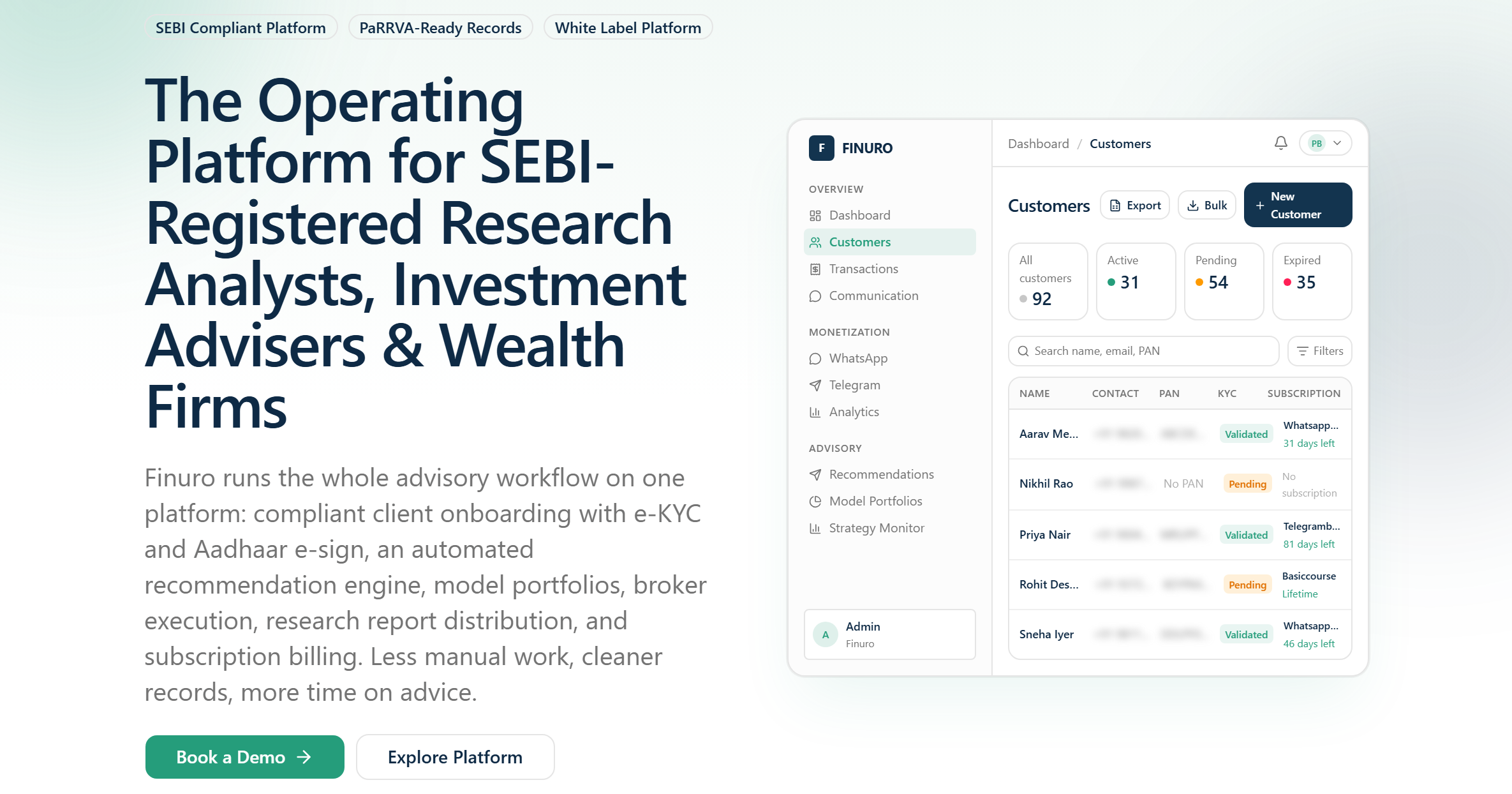 Last updated: 21 October 2026 IAASB filings are the reports and applications every SEBI Investment Adviser submits to BSE Limited, which SEBI recognised as the Investment Adviser Administration and Supervisory Body (IAASB). The main ones are a half-yearly periodic report within 30 days of 30 September and 31 March, and the annual compliance audit report with any adverse findings by 31 October. You also file applications for changes such as a new principal officer or address, send advertisements for approval, keep your deposit at the right level and pay IAASB's fees. A CRM for SEBI investment advisers keeps the client, complaint and consent data these filings rely on. This guide lists every IAASB filing and the recurring compliance tasks around them, with deadlines and a checklist. It is based on the SEBI Master Circular for Investment Advisers dated 6 February 2026 and the IA Regulations as amended up to 25 November 2025. It is not legal advice. IAASB sets the formats and can change them, so always check BSE's current IAASB circulars and SEBI rules. What is IAASB and what does it do?Regulation 14 of the IA Regulations lets SEBI recognise a body to administer and supervise investment advisers. SEBI recognised BSE Limited as IAASB, and as RAASB for research analysts, for five years from 25 July 2024. SEBI keeps registration, enforcement and penalty powers. Under Annexure D of the master circular, IAASB handles:
IAASB may also carry out on-site or off-site inspections on behalf of SEBI or alongside it. Which filings does an IA submit to IAASB?What goes into the half-yearly periodic report?Regulation 15(12) requires IAs to send SEBI the information and reports it specifies. The master circular says IAASB sets the periodic report format in consultation with SEBI and updates it when rules change. All IAs submit periodic reports to IAASB. Annexure D describes IAASB's monitoring reports as covering general details of the IA, customer complaints and client details. In practice, expect to give client numbers and complaint figures for the half-year, so these should reconcile with your client register and the complaint data on your website. Use the current template from BSE rather than an old copy, because IAASB can change the fields. DeadlinesFor the half-year ending 30 September, file by 30 October. For the half-year ending 31 March, file by 30 April. How does the annual compliance audit work?Regulation 19(3) requires a yearly audit of compliance with the IA Regulations by a member of ICAI, ICSI or ICMAI. The master circular adds the detail. CoverageThe audit report must name each provision of the regulations, circulars and guidelines on which compliance is reported. TimingComplete the audit within six months of the financial year end, so by 30 September. Submit the report to IAASB or SEBI within one month of the audit report date. Adverse findingsSubmit any adverse findings with the action taken, approved by the individual IA or by the management of a non-individual IA, within one month of the audit report and no later than 31 October. Segregation certificateKeep an annual certificate from a member of ICAI, ICSI or ICMAI, or an auditor, confirming client-level segregation of advisory and distribution. It is obtained within six months of year end and forms part of the audit. PublicationPublish the audit status, and any adverse findings with action taken, on your website, and give the compliance audit report to your clients. Which changes need an application through IAASB?Annexure D lists post-registration applications that IAASB scrutinises and recommends to SEBI:
A change in control needs SEBI's prior approval under Regulation 15(11), applied for through IAASB. SEBI's FAQs say the approval is valid for six months, within which a fresh registration application must be filed with all applicable fees. Regulation 13(b) also requires you to tell SEBI promptly if any information you gave earlier turns out to be false or misleading, or has materially changed. What fees and deposits does IAASB administer?IAASB collects administrative fees from IAs applying for registration or renewal, at rates BSE sets. Check BSE's current fee notice, as this guide does not quote IAASB's amounts. SEBI's own fee to keep registration in force is due every five years, within three months before the paid period ends: ₹1,000 for individuals and firms and ₹5,000 for body corporates including LLPs. Your deposit is lien-marked to IAASB and depends on the maximum number of clients on any day of the previous financial year: ₹1 lakh up to 150 clients, ₹2 lakh for 151 to 300, ₹5 lakh for 301 to 1,000 and ₹10 lakh above that. Revise it by 30 April if you move slab. IA compliance checklist: monthly, half-yearly, annual and ongoingIAASB filings sit inside a wider set of duties. This checklist combines both. For the fee and agreement rules behind several of these items, see IA fee rules and client agreements. For the risk profiling records, see our risk profiling and suitability guide. Where do IAASB filings usually go wrong?Numbers that do not matchClient counts in the periodic report that differ from the client register, or complaint figures that differ from what the website shows. Missed deadlinesTreating 31 October as the only audit deadline, when the report itself is due within one month of the audit report date. Late change applicationsChanging a principal officer, address or shareholding without filing the application through IAASB. Expired certificationsStaff whose NISM certificates lapse, which breaks the "at all times" requirement in Regulation 7. Keep the data behind your IAASB filings in orderFinuro does not file anything with IAASB, and it is not a substitute for your compliance auditor. What it does is keep the underlying records: KYC fetched from CVL KRA and NDML KRA, MITC and Aadhaar e-sign records with monthly bulk downloads, risk profiles, client and renewal numbers in business analytics, unified inbox history, and an audit trail of every create, update and delete. See how a CRM for SEBI investment advisers gets your half-yearly report and annual audit off to a clean start. Related Finuro features
Frequently asked questionsAnswers to common questions on this topic. Built for SEBI RAs and IAs Clean data for every IAASB filingKeep clients, consents, risk profiles and communication in one CRM so half-yearly reports and audits start from accurate records. |

Book a Demo
See how Finuro handles onboarding, recommendations, model portfolios, and billing for your advisory firm. Tell us a little about your practice and we'll walk you through the platform on a live call.