Handling Complaints: SCORES & ODR for RAsA research analyst must resolve a SCORES complaint and upload an Action Taken Report within 21 calendar days. Unresolved complaints go to RAASB for first review and SEBI for second review, and clients can also take disputes to online conciliation and arbitration on SMART ODR. 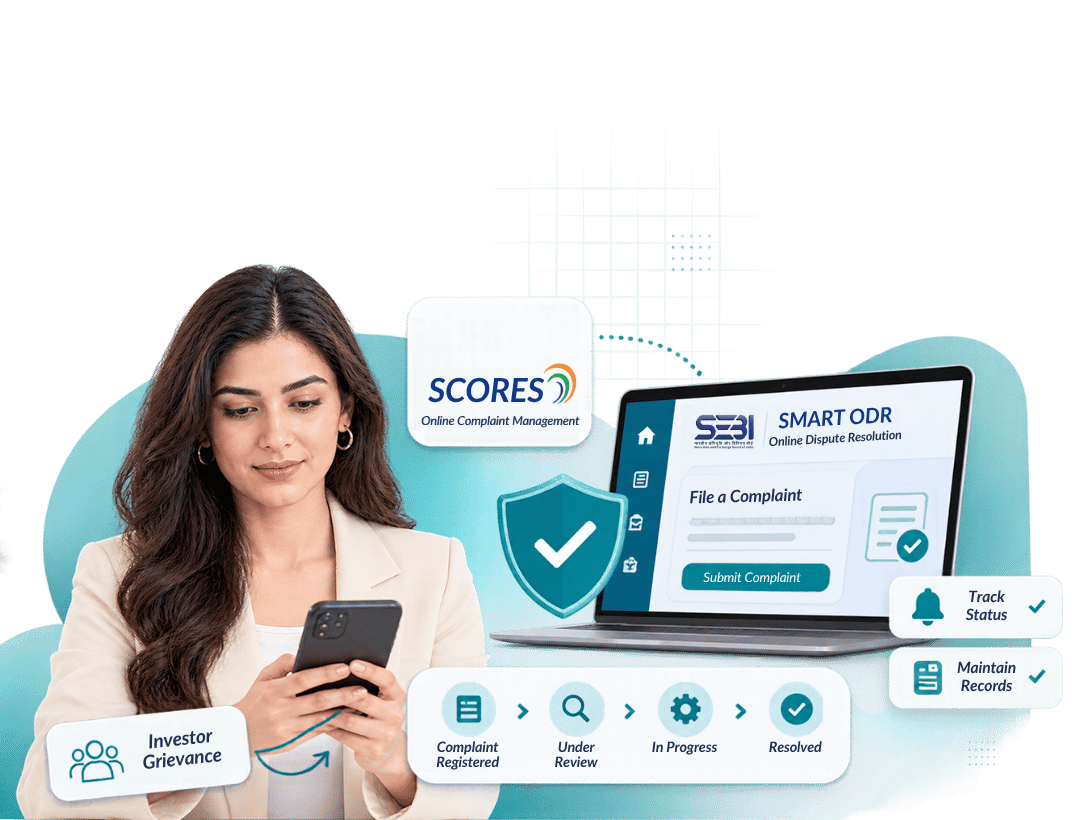 Last updated: 21 October 2026 A research analyst SCORES complaint must be resolved, with an Action Taken Report uploaded on SCORES, within 21 calendar days of receipt. The same 21-day outer limit applies to any grievance a client raises directly with you, under Regulation 26B of the SEBI (Research Analysts) Regulations, 2014. If the client is still unhappy, the complaint goes to review by RAASB and then SEBI, and the client can take the dispute to online conciliation and arbitration through SMART ODR. A CRM for research analysts that keeps every message in one inbox makes those timelines much easier to meet. This guide explains your grievance obligations, the SCORES 2.0 workflow and timelines, how SMART ODR works, and a practical complaint-handling process. It is a summary of SEBI circulars, not legal advice; check the current SEBI rules before relying on any timeline. What are a research analyst's grievance redressal obligations?SEBI's rules give RAs a short list of standing duties, most of them set out in the Master Circular for Research Analysts dated February 6, 2026. Resolve within 21 calendar daysRegulation 26B requires RAs to redress investor grievances promptly and not later than 21 calendar days from receipt. The Investor Charter says the RA should try to resolve grievances immediately, within that limit. Publish your grievance contactsPoint 10 of the MITC must give your contact details as per your grievance redressal and escalation matrix, then SCORES, then SMART ODR. Your terms must also name the designated person and email for grievances. Display the grievance noticeThe master circular asks RAs to display, in their offices, the compliance officer's and CEO/partner/proprietor's contacts, SCORES details and SEBI's toll-free helpline. Publish complaint data monthlyRAs must disclose complaint data on their website (and app, if any) by the 7th of the following month, in the format in Annexure E of the master circular. Enrol on SMART ODR and link to itResearch analysts are market participants under SEBI's ODR master circular, so they must be enrolled on the ODR portal and display a link to it on the home page of their website and mobile apps. Note that the minimum terms and conditions in Annexure B of the master circular mention resolving grievances within 7 business working days "or such timelines as may be specified by SEBI". Many RAs aim for the shorter target internally and treat 21 calendar days as the regulatory maximum; confirm with your compliance officer how you word this in your terms. How does SCORES 2.0 work for complaints against RAs?SCORES is SEBI's online complaint platform at scores.sebi.gov.in. SEBI's circular of September 20, 2023 (SEBI/HO/OIAE/IGRD/CIR/P/2023/156) rebuilt it with auto-routing, shorter timelines and two levels of review, effective December 4, 2023. The Investor Charter for RAs says the first review is done by the designated body, RAASB, and the second by SEBI. If the RA does not upload an ATR within 21 days, the complaint moves to first review automatically. A complaint in SEBI review is closed only when SEBI disposes of it, not when you file an ATR. If the client opts for ODR or another civil remedy while the complaint is pending, it is treated as disposed of on SCORES. Your SCORES loginFor intermediaries registered after August 2, 2019, SCORES user IDs and passwords are generated automatically and sent to the contact person's or compliance officer's email given at registration. Keep that email monitored and the details current. What SCORES does not handleComplaints already before a court or quasi-judicial body, disputes pending in ODR, and matters for other regulators are outside SCORES. What is SMART ODR and when can a client use it?SMART ODR (smartodr.in) is the common Online Dispute Resolution portal run by the stock exchanges and depositories under SEBI's Master Circular for Online Resolution of Disputes (SEBI/HO/OIAE/OIAE_IAD-3/P/CIR/2023/195, updated December 2023). Research analysts and their clients are covered by it. When ODR startsA client should first complain to the RA and may then use SCORES. They can go to ODR if the grievance was not resolved satisfactorily by the RA, or at any stage of the SCORES escalation, within the applicable law of limitation. RAs can start it tooAn RA may also start ODR for an unresolved dispute after giving the client at least 15 calendar days' notice. Conciliation firstThe dispute is reviewed by the exchange or depository, then sent to an ODR institution, which appoints a neutral conciliator. Conciliation aims to finish within 21 calendar days, extendable by 10 days if both sides agree. Then online arbitrationIf conciliation fails, either side can go to online arbitration. When the client pursues it, the market participant must deposit 100% of the admissible claim value with the exchange or depository and pay the applicable fees. The arbitrator aims to pass an award within 30 calendar days of appointment. The ODR master circular has been updated more than once, and fees, deposit rules and timelines can change. Check the current version on sebi.gov.in and the rules on smartodr.in before you act on a live dispute. How should an RA handle a complaint, step by step?1. Log it the day it arrivesRecord the date, channel, client ID and issue, whether it came by email, phone, WhatsApp or SCORES. The 21 days run from receipt. 2. Acknowledge quicklyTell the client you have received the complaint, who is handling it and when they will hear back. 3. Pull the recordsCollect the KYC, signed terms and MITC, recommendations sent, delivery logs, payment proof and any call recordings for that client. 4. Resolve and reply in writingGive a clear, specific answer, including any refund due under your terms, and keep a copy. 5. File the ATR on timeFor SCORES complaints, upload an ATR that addresses each point raised, well inside 21 days. 6. Update your monthly dataAdd the complaint to the figures you publish on your website by the 7th of next month. Keep all records linked to a complaint until it is fully resolved, even beyond the usual five-year retention period. Our record keeping guide explains why. Common reasons RAs get complaintsThe minimum terms in the master circular name non-receipt of research reports, missing pages or download problems, and other service deficiencies. In practice, refund disputes, unclear fees and misleading promises in sales calls also lead to complaints. Clear terms, a signed MITC, proportionate refunds as your terms provide, and recorded sales conversations prevent most of them. Investors can read our guide on filing a complaint against a research analyst. Keep complaint evidence in one placeFinuro's CRM gives you a unified inbox across email, WhatsApp and Telegram, message templates for acknowledgements and replies, and an audit trail of who created, changed or deleted a record and when. Recommendation delivery logs, KYC documents and e-signed MITC consents sit with each client, so you can answer a complaint with evidence. Finuro does not connect to SCORES or SMART ODR; you file ATRs on those portals yourself. See the CRM for research analysts page. Related Finuro features
Frequently asked questionsAnswers to common questions on this topic. Built for SEBI RAs and IAs Answer complaints with the records to back youKeep every client message, consent and delivery log in one Finuro CRM.  |

Book a Demo
See how Finuro handles onboarding, recommendations, model portfolios, and billing for your advisory firm. Tell us a little about your practice and we'll walk you through the platform on a live call.