Dual Registration as Both RA and IASEBI RA and IA dual registration is allowed. Since December 2024, an individual or partnership firm registered as an investment adviser can also be granted research analyst registration, and the reverse, provided it complies with each set of regulations separately and keeps research and advisory services clearly segregated. 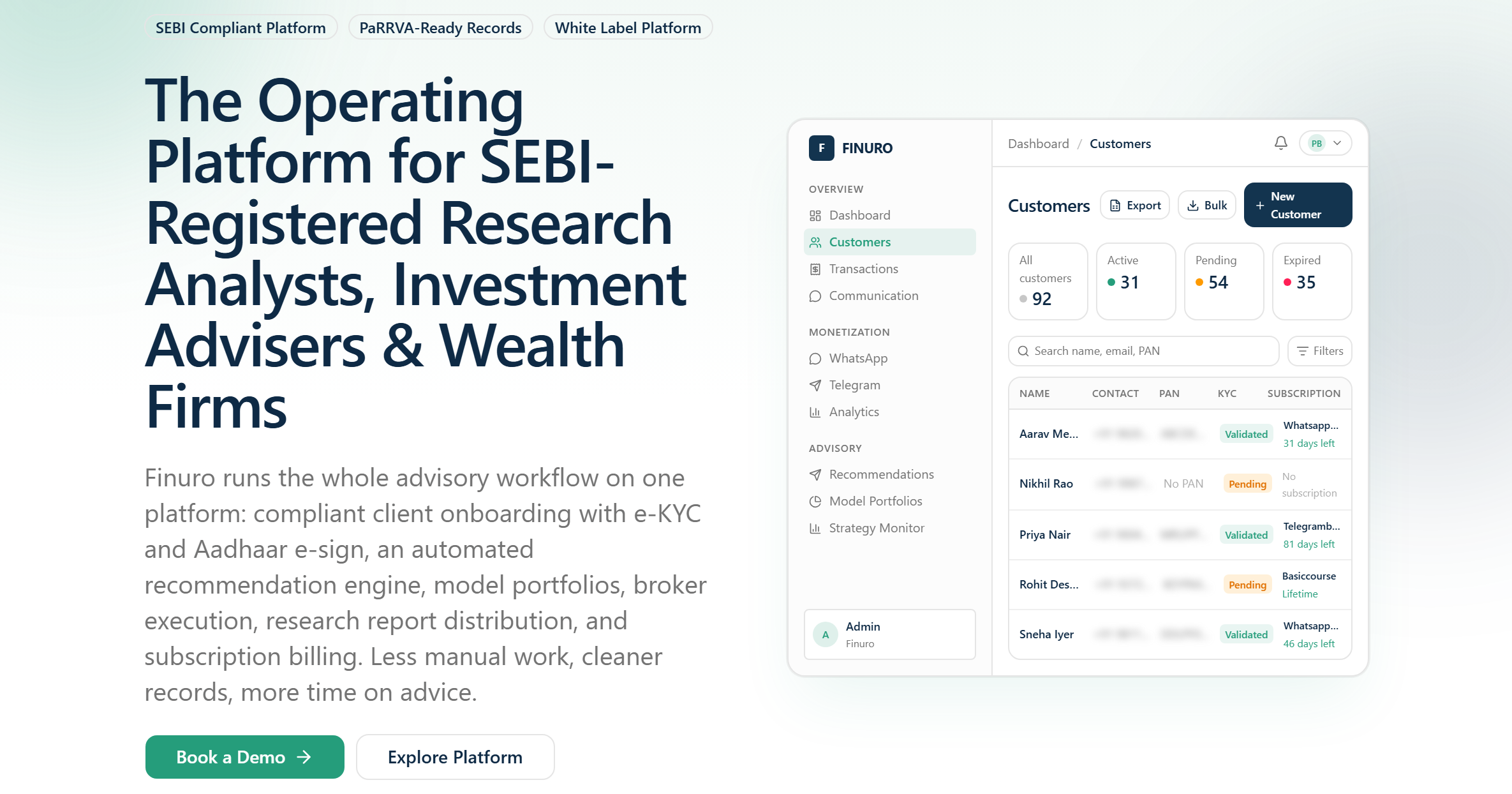 Last updated: 21 October 2026 Yes, SEBI allows RA and IA dual registration. Amendments that took effect on 16 December 2024 added matching provisos to Regulation 9 of both the SEBI (Research Analysts) Regulations, 2014 and the SEBI (Investment Advisers) Regulations, 2013. An individual or partnership firm registered under one can be granted registration under the other. SEBI's February 2026 master circulars add two conditions: comply with each set of regulations and reporting requirements separately, and give an undertaking to keep an arm's-length relationship with research and advisory services clearly segregated. Running two regulated businesses from one desk is easier with a CRM for research analysts and a CRM for SEBI investment advisers that keep the two sets of records apart. This guide covers who can hold both registrations, how RA and IA obligations differ, what segregation means in practice, the application route, and a setup checklist. It is based on the RA Regulations (amended up to 10 October 2026), the IA Regulations (amended up to 25 November 2025) and SEBI's master circulars for RAs and IAs dated 6 February 2026. Check the current rules before you apply. This article is general information, not legal advice. Can you be both a SEBI research analyst and an investment adviser?Yes. The two provisos mirror each other. IA adding RAUnder the proviso to Regulation 9 of the RA Regulations, an individual or partnership firm registered as an investment adviser may also be granted registration as a research analyst, on terms SEBI sets. RA adding IAUnder the proviso to Regulation 9 of the IA Regulations, an individual or partnership firm registered as a research analyst may also be granted registration as an investment adviser. The conditions SEBI has setBoth master circulars say the dual registrant must comply with the rules, regulations and reporting requirements of each regulation separately. It must also give an undertaking to keep an arm's-length relationship between its IA and RA activities and keep advisory and research services clearly segregated. Companies and LLPsThe provisos name individuals and partnership firms. The RA Regulations' definition of principal officer also refers to a non-individual entity registered as both RA and IA. If you are a company or LLP, confirm the current conditions with RAASB and IAASB before you apply. Why would you want both registrations?The two licences cover different services. A research analyst publishes research reports and recommendations, such as buy, sell or hold calls, price targets and model portfolios, to subscribers. These are not tailored to any one client. An investment adviser gives personalised advice based on each client's risk profile and the suitability of the product, and owes the client a fiduciary duty. Serve both kinds of clientSome clients want a research subscription. Others want one-to-one portfolio advice. Dual registration lets you offer both legally, under separate agreements. Stay within each licence's scopeIf an RA starts giving personalised advice, or an IA sells non-personalised paid calls to the public, they risk going beyond what their registration permits. Holding both, with clear segregation, removes that risk. Build one brandYou can run one practice brand as long as each client always knows which service, agreement and registration applies to them. For a fuller comparison of the two roles, see SEBI RA vs RIA. How do RA and IA obligations differ?Because each regulation applies separately, you carry both sets of obligations. The main differences are below. Both regimes require the client agreement or terms (with MITC for RAs) before any service or fee, KYC, records of client interactions, grievance redressal and investor charters. You keep each set separately for each registration. What does "clearly segregated" mean in practice?The regulations do not give a step-by-step method, but the undertaking you sign commits you to an arm's-length relationship. A sensible way to show it to an auditor or inspector is to keep separate records at every stage of the client relationship. Separate agreements and consentUse an RA terms and conditions document with MITC for research subscribers, and an IA client agreement for advisory clients. Get and store consent for each separately. Separate onboardingIA clients need risk profiling and suitability before any advice. RA subscribers go through KYC and consent. Do not reuse an RA onboarding flow for advisory clients. Separate fees and invoicesBill research subscriptions and advisory fees as separate products, and check each against its own fee limit. Never take a combined payment that cannot be split between the two services. Separate communicationLabel every message with the service and registration it relates to. Do not send personalised advice through a research channel, and do not put public research calls in an advisory chat. Separate reporting and auditsPrepare each half-yearly report and each annual compliance audit from the records of that registration. No distribution at the individual levelIndividual RAs and individual IAs both face restrictions on distribution services. A dual registration does not change that. Can the same client take both research and advisory services?Neither master circular expressly bans one client from taking both services. Because the services must be clearly segregated, though, each needs its own agreement, fee and records. For personalised advice, the IA rules on risk profiling and suitability apply in full. Expect an auditor to check that you have not charged twice for the same service or used a research subscription to deliver personalised advice. If you plan to offer both to the same clients, get professional compliance advice first. How do you apply for the second registration?You apply under the regulation you do not yet hold, through BSE, which acts as both RAASB and IAASB.
The RA application is covered step by step in how to become a SEBI-registered research analyst, and the IA side in how to become a SEBI investment adviser. Can a dual registrant be "part-time"?Both regulations have a part-time category for people whose other work is unrelated to securities, does not involve handling clients' money and does not involve investment advice. Holding the other SEBI registration does not, by itself, make you part-time under either regulation. If you also have an unrelated job or practice, check the conditions with RAASB and IAASB. See part-time research analyst rules. Dual practice setup checklistFor the RA side's recurring tasks, use the research analyst monthly compliance checklist. Run a segregated RA and IA practice in one systemA dual practice needs strict separation without double the admin. Finuro lets you configure a separate onboarding sequence for each product. For example, a research plan can use KYC, MITC, e-sign and payment, while an advisory product adds your own risk questionnaire. Plans, GST invoices, delivery channels and records are all organised by product, with an audit trail of every change. See the CRM for SEBI research analysts and the CRM for SEBI investment advisers. Finuro does not file with RAASB or IAASB and does not give legal advice. Always check the current SEBI regulations and circulars. Related Finuro features
Frequently asked questionsAnswers to common questions on this topic. Built for SEBI RAs and IAs Run RA and IA services side by sideSet up separate onboarding, billing and records for each registration in Finuro, with an audit trail across both. |

Book a Demo
See how Finuro handles onboarding, recommendations, model portfolios, and billing for your advisory firm. Tell us a little about your practice and we'll walk you through the platform on a live call.